The same launcher works on Windows and macOS. The web path starts from GitHub.
HARNESS FIRMWARE
BOOTSWARM
Give every repo its own memory system
Harness stores project-specific rules, lessons, and workflows in the repo, so new sessions start informed.
NEW PROJECT · WEB · WINDOWS · MACOS
OPEN WEB CREATOR →
STEP 01 · NAME IT
Pick a name and folder
STEP 02 · ASSEMBLE
Harness arrives with the repo
STEP 03 · BUILD
Open it and start working
Create the repo and the system together
Name the project once. Harness creates the repo with memory, workflows, and both agent setups already inside.
Project memory, 30 workflows, Claude Code setup, and Codex adapters are already there.
Run init-project once to tailor the system to the repo.
WEB: AUTHORIZE GITHUB ONCE · LOCAL: REUSES YOUR EXISTING GH LOGIN · PRIVATE REPO BY DEFAULT
COMMITTED PROJECT KNOWLEDGE · ILLUSTRATIVE MEMORY FLOW · pitfalls.md · 2026-07-18
STEP 01 · OBSERVE
A session finds a problem
STEP 02 · COMMIT
Save the fix in the repo
STEP 03 · RETRIEVE
Future sessions reuse it
MEMORY FLOW · ILLUSTRATIVE
Stop solving the same repo problem twice
Save a lesson once. /recall brings it back when a later task needs it and shows where it came from.
Stale local server · volatile trace
Named reference · reviewable repo change
Same repository or clone · retained guidance
claude · session A · 2026-07-18
preview shows an outdated version of the site
server reuse on a busy port · stale process from a prior session
/recall save local preview servers: stale or wrong site
saved → .claude/reference/pitfalls.md · reviewable repo change
session ended · context cleared
agent · later matching task · same repo or clone
/recall routes to .claude/reference/pitfalls.md
reads cited entry · known check available · port owner checked first
DEFAULT FILE-BASED LAYER · RUNTIME-SPECIFIC

FOUR OF THE STANDING RULES, VERBATIM FROM CLAUDE.md
Keep every session lean
CLAUDE: 7,060 B + 5,522 B = 12,582 B · 12.3 KiB · ≈3,146 tok/turn · CODEX: 3,252 B + 5,522 B = 8,774 B · ≈2,194 tok/turn
Only a small index loads at startup. The 228,757-byte skill library stays out of context until a task needs it.
- Reproduce bugs before fixing them.
- Never claim visual/UI verification you didn't actually perform.
- Can't run the authoritative check, flag the risk plainly, don't claim it passes.
- Scope discipline: No unrequested refactors, features, abstractions, or extra coding.
CLAUDE.md adds 7,060 B at startup · read it before adopting
SKILL LIBRARY · 7 NEW · 30 TOTAL
Seven new workflows, ready on demand
The latest firmware adds parallel solution bakeoffs, a personal working mode, CI watch, plain-language translation, a fresh Codex review, claim verification, and a standing prose filter.
- arenacompare candidate solutions, then combine their strongest parts
- automate-meturn your working patterns into a reusable project mode
- babysit-ciwatch pull request checks and fix failures until green
- brorestate the last answer in plain language without losing facts
- codex-reviewrun a fresh Codex review, then verify each finding
- unslopremove predictable AI writing patterns before prose lands
- verify-thistest one claim against a baseline and return a clear verdict
pan or point · arrow keys select a skill
writing-skills · 27,159 B · main instruction file
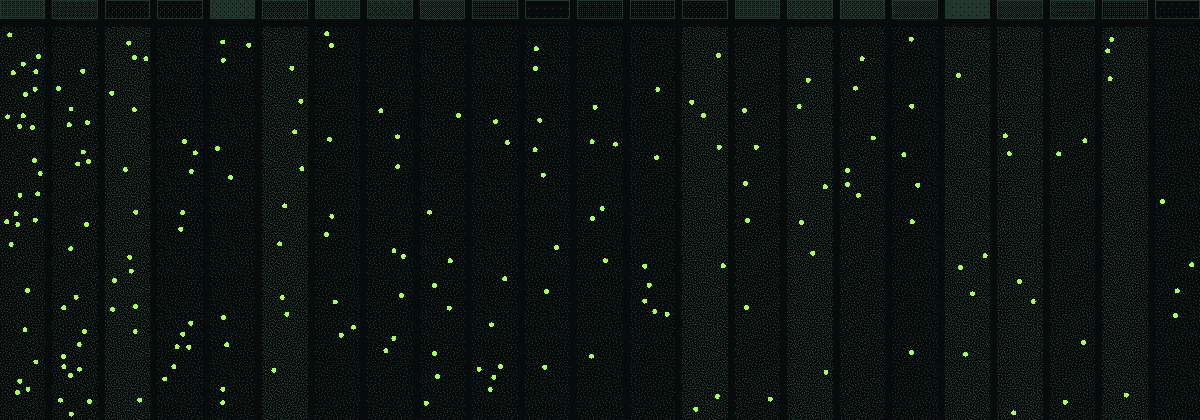
Dot count shows relative file size. The 30 main skill files total 228,757 B, or 223 KiB. Support files are separate.
- writing-skills: 27,159 B main instruction file, discipline
- impartial-review: 21,995 B main instruction file, discipline
- init-project: 13,400 B main instruction file, core
- enhance-prompt: 10,335 B main instruction file, extras
- why: 9,121 B main instruction file, extras
- fable-mode: 8,938 B main instruction file, extras
- merge: 8,590 B main instruction file, core
- advocate: 7,837 B main instruction file, extras
- wow-loop: 7,749 B main instruction file, extras
- lab: 7,693 B main instruction file, extras
- automate-me: 7,480 B main instruction file, core
- handoff-audit: 7,182 B main instruction file, extras
- unslop: 7,055 B main instruction file, extras
- humanizer: 6,953 B main instruction file, extras
- codex-review: 6,684 B main instruction file, discipline
- purposeful-writing: 6,383 B main instruction file, extras
- forge-repo-ui-skill: 6,329 B main instruction file, extras
- optimize-context: 6,253 B main instruction file, core
- arena: 6,070 B main instruction file, extras
- writing-plans: 5,812 B main instruction file, discipline
- addskill: 5,784 B main instruction file, core
- brainstorming: 5,755 B main instruction file, discipline
- caveman: 5,150 B main instruction file, extras
- sync-starter: 5,081 B main instruction file, core
- recall: 4,588 B main instruction file, core
- refine: 4,011 B main instruction file, core
- long-horizon: 3,510 B main instruction file, discipline
- verify-this: 3,122 B main instruction file, discipline
- babysit-ci: 2,098 B main instruction file, discipline
- bro: 640 B main instruction file, extras
The foundation still handles project memory, setup, maintenance, planning, and long-running checks.
- recallsave and retrieve repo lessons
- refinefix the harness after friction
- init-projectset up a repo from detected facts
- sync-startershare fixes without overwriting local rules
- optimize-contextremove guidance that costs more than it helps
- long-horizoncarry one contract across long work
- impartial-reviewask fresh agents to check the work
- wow-loopimprove visuals through screenshot review
30/30 generated adapters present at Codex tree 5a624093 · contract checks cover adapter sync · CI exercises the Windows project generator end to end
CONTEXT ARCHITECTURE · SMALL ROOTS · FOCUSED SUBFILES
Load only what the work needs
CLAUDE.md and AGENTS.md stay small. They point each agent to focused project files only when the work needs them.
HOW WE OPTIMIZE CONTEXT →
SESSION START · ALWAYS LOADED
ROUTING LAW
Match the task, then open the relevant file
REFERENCES + SKILLS · LOADED WHEN MATCHED
ROOT RULES STAY SHORT · REPO FACTS LIVE IN REFERENCES · WORKFLOW DETAIL LOADS ON DEMAND
WHAT MAKES IT POWERFUL
Built to improve with use
The repo keeps what works. Every improvement stays visible, reviewable, and easy to undo.
- Project facts live in the repo Architecture, commands, deployment details, and pitfalls survive every session.
- The right lesson comes back /recall finds and cites the relevant file. It saves new lessons in the right place.
- Fix the workflow, not just the output /refine turns recurring friction into one small, reversible change.
- New repos start from facts /init-project reads the stack, asks only what it cannot infer, and removes irrelevant setup.
- Write each skill once Claude stays canonical. Generated Codex adapters add runtime-specific discovery and safety rules.
- Share fixes without erasing local rules /sync-starter moves generic improvements while protecting project-specific memory.
- Use fresh eyes for hard work long-horizon, impartial-review, and wow-loop add independent checks when the runtime supports them.
RUNTIME SUPPORT · SHARED SYSTEM · EXPLICIT ADAPTERS
FIG 07 · ONE PLAYBOOK SOURCE · RUNTIME-SPECIFIC SETUP
Built for Claude Code and Codex
Write each skill once. Harness keeps Claude canonical and generates Codex adapters with runtime-specific rules. All 30 adapters are present. rev 2094fa7b · canonical tree 7d68e369 · Codex tree 5a624093
FLASH IT · MIT · GitHub template
Start warm
NEW REPO · NEW PROJECT LAUNCHER
launcher: Windows or macOS · project name: my-app
existing GitHub CLI login detected
Creating private repo 'my-app' from template ryanportfolio/Harness-Firmware ...
> gh repo create my-app --template ryanportfolio/Harness-Firmware --private --clone
Stripping template-only files and replacing README ...
> git -C my-app push -q
DONE. Private repo created, cloned, and pushed
next: open it in Claude Code · run /init-project
create from the web or get the local launcher for Windows and macOS · the local launcher reuses your signed-in GitHub CLI session
SKILLS ONLY · EXISTING REPO
/plugin marketplace add ryanportfolio/Harness-Firmware
/plugin install claude-starter@claude-starter
installs 30 skills · 223 KiB across the main skill files
names: Harness Firmware is the template · claude-starter is its plugin on the marketplace · fullbuild.ai is the site you are on
Use the template for the full system. Run /init-project to fill in the repo facts. Use the plugin commands when an existing repo only needs the Claude Code skills.
BEFORE YOU FLASH · OPERATIONAL ANSWERS
Questions the repo answers
How much context does it add?
Up to 12,582 bytes (about 3,146 tokens) for Claude Code and 8,774 bytes (about 2,194 tokens) for Codex. Tool catalogs and runtime-added context are not included.
How does memory persist?
/recall saves lessons in the repo and brings them back when a later task needs them.
Which runtimes use the same source?
Claude holds the canonical skill. A repo script generates the Codex adapter. Runtime-specific rules stay separate.
What does 223 KiB count?
The 30 canonical SKILL.md files total 223 KiB. Their 167,064 B of support files and 41,840 B of generated Codex adapters are separate.
Can I use it in an existing repo?
Yes. The marketplace commands add the Claude Code skills. Use the template when the repo also needs Codex adapters, references, and sync wiring.
What do I need installed?
The web creator only needs GitHub. The local Windows and macOS launcher needs Node and Git. An authenticated GitHub CLI session makes private repo creation automatic.
Does it use my existing GitHub login?
Locally, yes. The launcher reuses your existing GitHub CLI login. On the web, you authorize the Harness GitHub App once, then later projects can be created in one step.
POWER-ON · NEW PROJECT · MIT